

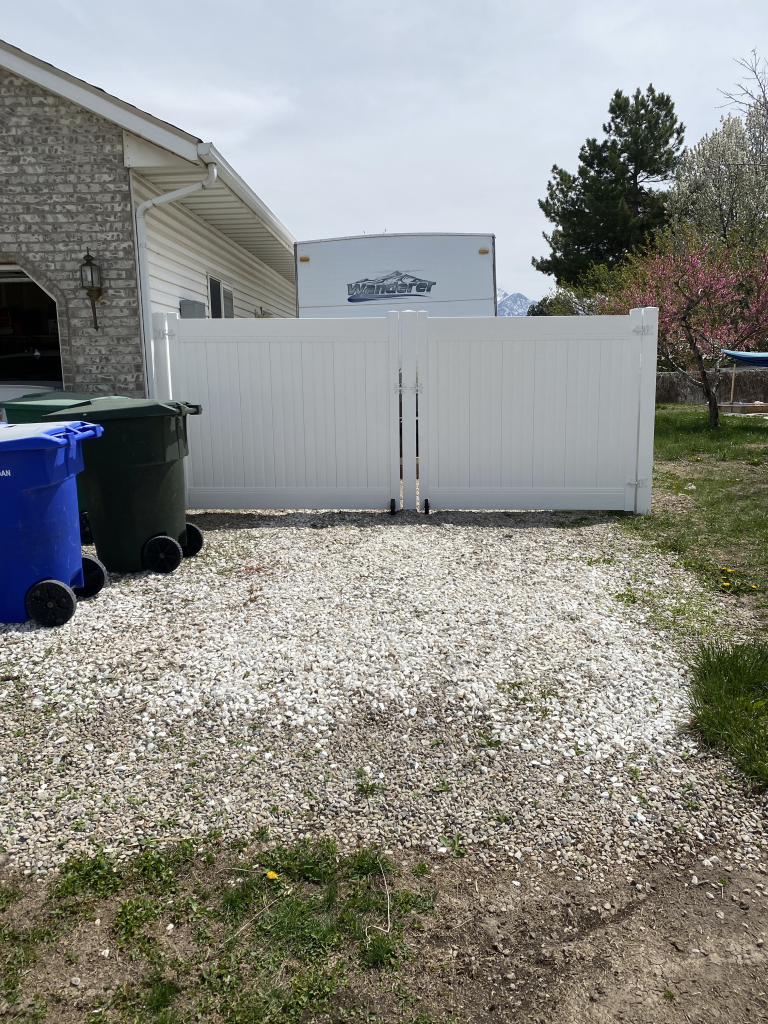
Commercial vinyl fencing uses thicker wall extrusions than retail-grade panels, which is what prevents bowing, flexing, and impact damage across long runs. For commercial perimeters, HOA common areas, and high-wind exposures, the heavier wall profile is the spec that prevents warranty callbacks.
The upcharge is real, and so is the question of when it is justified. Here is what the wall profile actually changes once the fence is in the ground.
What Wall Thickness Changes in the Field
Wall thickness is the measured thickness of the extruded vinyl that forms the rail, post, or picket. Thin-wall retail product is engineered for short residential runs with minimal exposure. Commercial profiles are engineered for load.
The differences show up in four places:
- Wind load capacity. Solid privacy panels behave like sails. Thicker rails and posts resist the deflection that racks panels out of square.
- Impact resistance. Commercial sites take contact from equipment, carts, and traffic. Thin walls crack, while heavier walls absorb and recover.
- Rail deflection over span. Longer panel spans need stiffer rails to avoid the visible sag that shows up a season after install.
- Post rigidity at the gate. Gate posts carry cycling load that standard posts were never rated for.
When Standard Profile Is Sufficient and When It Is Not
Not every run needs the heaviest profile. Spec’ing up everywhere inflates a bid without improving the install.
Standard profile generally holds on interior lot-line runs, shorter spans, sheltered locations, and picket or semi-privacy styles where wind passes through.
Commercial profile earns its cost on solid privacy runs, exposed perimeters, elevated or open sites where wind accelerates, HOA and commercial common areas with long continuous runs, and any location where a failure means a callback across dozens of sections.
The decision is exposure and consequence rather than budget. A callback on a 400-foot HOA perimeter costs more than the profile upgrade ever did.
UV Stability and the Utah Sun
Wall thickness governs structure, while UV formulation governs appearance and long-term brittleness. The second factor matters more in Utah than in most markets.
High-altitude sun exposure accelerates chalking and color fade in vinyl that lacks adequate UV inhibitors. Product formulated for this exposure holds color and retains impact resistance instead of turning brittle after a few seasons. When you compare panels, the UV package is as much a spec as the wall dimension.
How to Read a Manufacturer Spec Sheet
Panel marketing language is inconsistent across brands, so the spec sheet is the only reliable comparison.
Look for stated wall thickness in decimal inches for rails, posts, and pickets separately, because manufacturers often publish the thickest component and stay quiet on the rest. Check the rated wind load and the maximum span the rating assumes. Confirm the UV inhibitor package and the terms of the warranty, including whether it covers commercial installations at all.
Sourcing through a high-volume vinyl fence supply partner means every pallet ships to the same published profile, so what you spec on the bid is what lands on the jobsite.
Spec’ing vinyl on a commercial bid? We stock wholesale vinyl fence panels in commercial-grade profiles and can walk you through the spec.
Call (801) 566-4266 or send us a message.
Frequently Asked Questions
What wall thickness is considered commercial-grade vinyl fencing?
Commercial-grade profiles use measurably thicker rail, post, and picket extrusions than retail product. Compare published decimal thickness by component rather than relying on marketing labels.
Does thicker vinyl really reduce callbacks?
On exposed, long, or solid privacy runs, yes. Most vinyl callbacks trace to deflection, racking, or impact damage that heavier profiles resist.
Do I need commercial profile on every project?
No. Sheltered interior runs and open picket styles often perform well in standard profile. Exposure and run length should drive the decision.
Do you stock commercial-grade vinyl in volume?
Yes. We hold commercial-grade vinyl profiles in high volume at our West Jordan warehouse for jobsite delivery across Utah.