

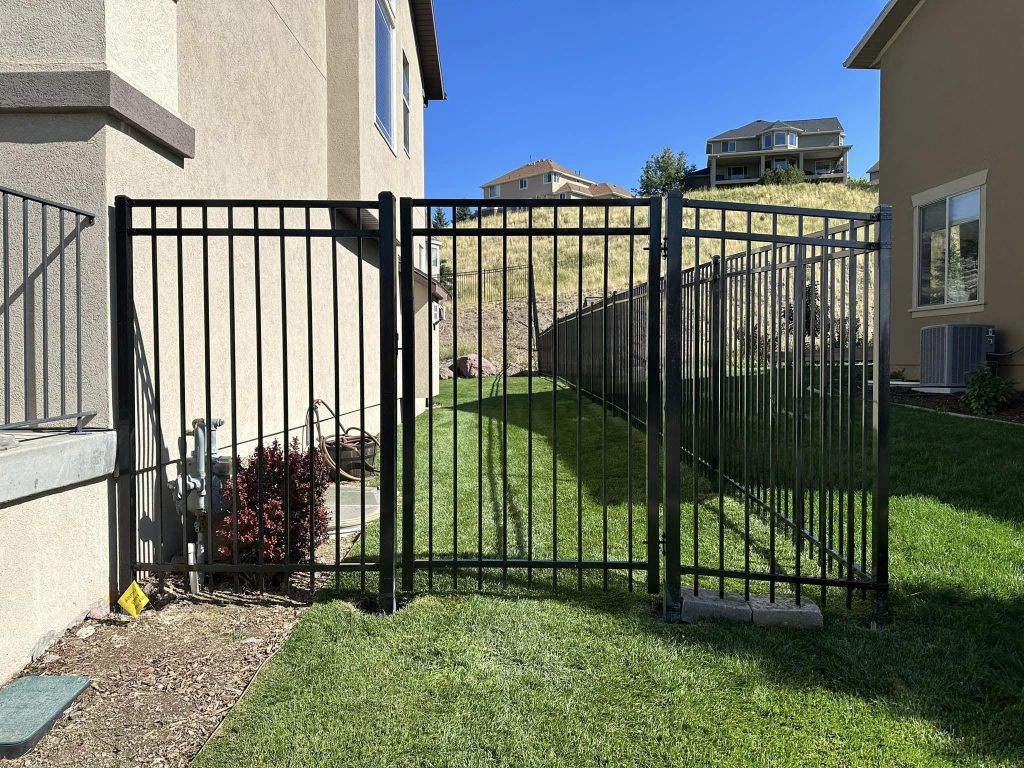
Fence post depth in Utah is driven by frost line, wind exposure, and soil type. Posts should extend below the local frost line, which varies across the state, with footing diameter and depth increased for tall privacy panels and exposed runs that carry significant wind load.
There is no single number that applies statewide. Confirm requirements with your local building department and the panel manufacturer’s published spec before setting posts.
Frost Line and Why Heave Lifts Posts
Frost heave happens when moisture in the soil freezes, expands, and pushes upward against anything embedded in it. A post whose footing sits above the frost line gets lifted a little each freeze cycle and does not fully settle back.
Over several seasons, the result is a visibly uneven fence line, gates that no longer latch, and rails pulling out of posts.
The defense is embedment below the frost depth, so the base of the footing sits in soil that does not freeze. Utah’s frost depth varies significantly by elevation and jurisdiction, and the Wasatch Front, high valleys, and southern Utah are not the same. Your local building department publishes the figure that governs your site.
Drainage matters alongside depth. A footing surrounded by saturated soil experiences more heave force than one that drains, which is why gravel bases beneath footings are common practice in this climate.
Wind Load on Solid Privacy Panels
A solid privacy fence is a continuous vertical surface, and wind treats it accordingly. The load transfers through the panel into the rails, into the posts, and finally into the footing.
This is why footing requirements change with panel type and height:
- Solid privacy panels capture full wind load and demand the most substantial footings
- Semi-privacy and picket styles let air pass through, reducing transferred load
- Ornamental aluminum and steel carry the least wind load due to open construction
- Taller panels increase leverage at the post base, which compounds the load at the footing
Exposure compounds height. An open, elevated site sees higher effective wind speeds than a sheltered interior lot. Manufacturers publish wind ratings tied to specific post spacing and embedment, and those ratings only hold if the installation matches the assumptions.
Soil Conditions Across the Salt Lake Valley
Soil determines how well a footing holds what it is carrying.
Clay-heavy soils retain moisture, which increases heave potential and can reduce bearing capacity when saturated. Sandy and gravelly soils drain well but may offer less lateral resistance, sometimes calling for wider footings. Rocky ground can make target depth physically difficult and may require alternate setting methods.
Because conditions vary lot to lot across the valley, the reliable approach is verifying at the site rather than assuming from a neighboring project.
How Post and Panel Spec Change Footing Requirements
Footing requirements are not set independently of the fence system. They follow from it.
Gate posts carry cycling load and leverage that line posts never see, and they should be sized and set independently, typically deeper and in larger-diameter footings.
Corner and terminal posts absorb tension from two directions and generally require more substantial footings than line posts.
Panel height and post spacing interact directly with wind rating, so tightening post spacing can be the difference between meeting a rating and missing it.
Post material and profile matter as well, because commercial-grade vinyl posts and steel posts have different rigidity and different failure behavior under load.
Specifying from professional-grade fencing inventory means published manufacturer specs govern the install rather than field estimates. Confirm the panel manufacturer’s requirements and your local code before setting the first post.
Spacing posts and panels for a Utah jobsite? We stock professional-grade fencing inventory and can supply the manufacturer specs your install needs to meet.
Call (801) 566-4266 or send us a message.
Frequently Asked Questions
How deep should fence posts be set in Utah?
Deep enough that the footing extends below the local frost line, with additional depth for gate posts, tall panels, and wind-exposed runs. Frost depth varies by jurisdiction, so confirm the figure with your local building department.
Does a privacy fence need deeper posts than an ornamental fence?
Generally yes. Solid privacy panels capture significantly more wind load than open picket systems, which increases the demand on posts and footings.
Why do my fence posts lift over the winter?
That is frost heave. It occurs when footings do not extend below the frost line, and it is made worse by poor drainage around the footing.
Do gate posts need different footings than line posts?
Yes. Gate posts carry cycling load and leverage that line posts do not, and should be sized and set independently.