

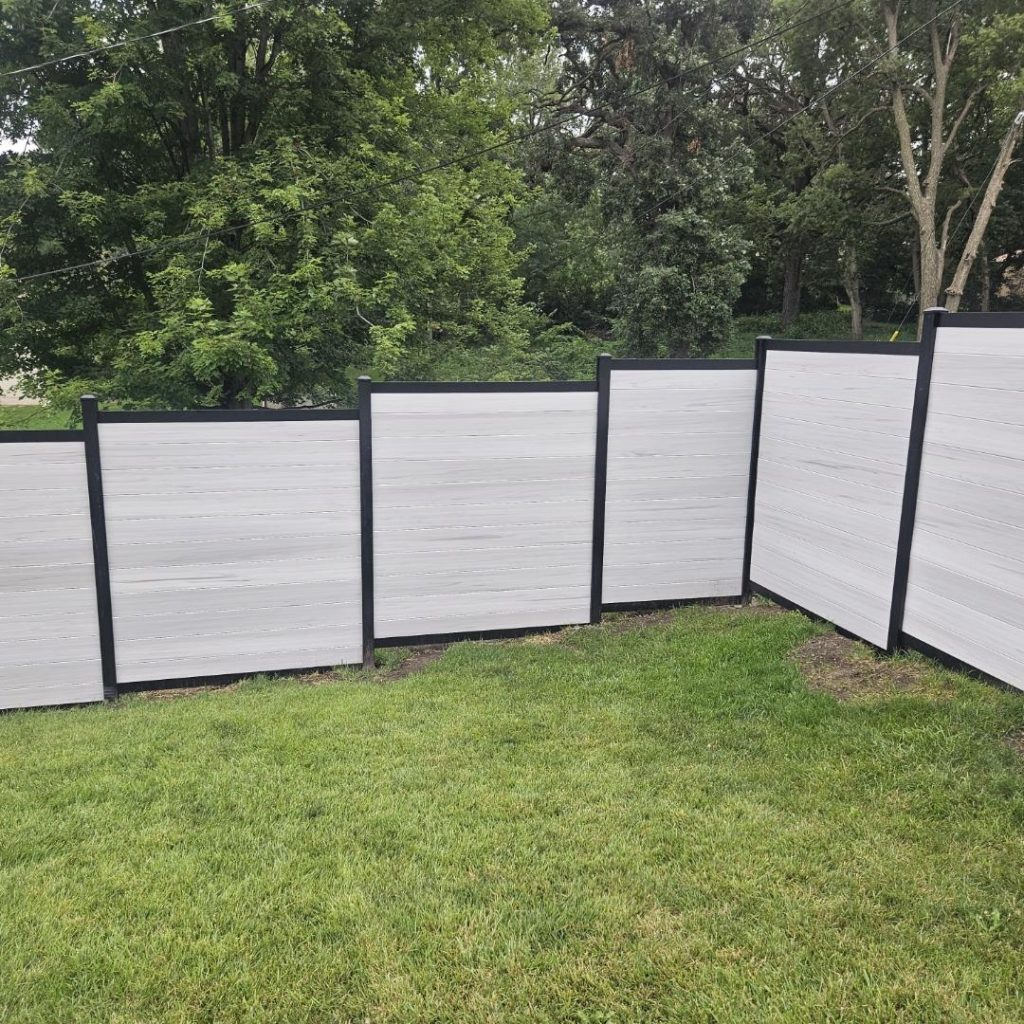
On grade change, rock, and irregular runs, a metal-frame flex system follows the ground where a rigid post-and-panel system has to be stepped, cut, or fought. If your crew is spending the afternoon making a straight product fit a crooked site, that is the job flex fencing was built for.
Why do rigid fence panels fail on sloped Utah lots?
The Wasatch Front does not offer many flat lots. Bench properties in Bountiful, Draper, and North Salt Lake fall away fast. Foothill lots in Alpine and Cedar Hills sit on decomposed granite and buried boulders. Rural parcels in Tooele and Heber run over swales and drainage cuts.
Rigid panels handle that two ways, and both cost you. Stepping creates triangular gaps under each section, which fails on any job where the fence has to contain animals or block sightlines. Cutting and rebuilding panels on site turns a supply-driven install into a fabrication job on the tailgate.
What does a flex fencing system change on difficult terrain?
A metal-frame flex system racks with the grade and accepts a range of infills, so the frame handles the terrain and the infill handles the aesthetic. That gives you:
- Continuous bottom line. No stepped gaps at grade.
- Fewer field modifications. Less cutting, less waste, faster runs.
- Infill flexibility. Match the neighborhood standard without changing the structural system.
- Rock tolerance. Adjustable spacing lets you move a post off an obstruction instead of drilling through it.
| Factor | Flex System | Post-and-Panel |
| Grade following | Racks with the slope | Steps, or racks with limits |
| Bottom line at grade | Continuous | Gaps under each step |
| Field modification | Minimal | Cutting and rebuilding |
| Obstruction tolerance | Adjustable post spacing | Fixed spacing |
| Best terrain | Slope, rock, irregular runs | Flat, straight runs |
When is post-and-panel still the better choice?
Flat commercial pads, straight suburban lot lines, and long uninterrupted runs on level ground do not need the extra system cost. Standard panels are faster and cheaper when the ground cooperates. The decision is terrain, not preference.
Contractors bidding hillside and acreage work can compare flex fencing materials Utah against conventional panel systems on the same takeoff, and our team supplies materials for professional fence installers on both paths so the choice stays a spec decision instead of a stocking one.
FAQs
How much slope can a flex system handle?
Considerably more than a rackable panel before stepping becomes necessary. Send us the grade change over the run and we will confirm what the system covers.
Can flex fencing be used for animal containment?
Yes, and the continuous bottom line is a primary reason to choose it on acreage and equestrian properties where a stepped gap lets animals through.
Is flex fencing more expensive than standard panels?
Material cost is higher. Installed cost on difficult terrain is often lower because of reduced field labor and waste.
What infills are available?
The system accepts a range of infill options, which lets you match an HOA standard or an existing fence line without changing the frame.
Send the grade profile from your next hillside bid and we will price flex against conventional panel on the same takeoff.
Contact Fence Connection at (801) 566-4266 to price your next hillside bid.