
For commercial property owners and industrial contractors in Utah, selecting a metal fence isn’t just about aesthetics, it’s a choice between two distinct engineering philosophies. While both ornamental steel and aluminum offer a significant upgrade over traditional barriers, the “right” choice depends on whether your priority is brute-force security or long-term, low-maintenance curb appeal.
As a leading fencing distributor in West Jordan, we maintain a deep professional grade fencing inventory of both materials. Here is the breakdown to help you determine which metal best suits your next commercial project.
Ornamental Steel: The Heavy-Duty Security Choice
When the goal is “protection first,” steel is the undisputed champion. It is the go-to material for high-security facilities like data centers, self-storage units, and industrial warehouses across the Salt Lake Valley.
- Impact Resistance: Steel is significantly more rigid and dense than aluminum. It is built to resist direct impact, making it much harder to bend or break through during a forced-entry attempt.
- Structural Integrity for Large Gates: Because of its strength, steel is the preferred material for heavy wholesale ornamental iron gates. Steel frames can support larger spans without sagging, ensuring your gate operator doesn’t burn out from misalignment.
- Deterrence: The sheer weight and “unyielding” feel of a steel fence provide a powerful psychological deterrent to intruders.
The Maintenance Trade-Off
While modern steel is galvanized and powder-coated to resist the elements, it is an iron-based alloy. In Utah’s climate, a deep scratch that reaches the raw metal can lead to rust if not addressed. We provide wholesale fence hardware and hinges and touch-up kits to help contractors maintain these systems for decades.
Aluminum Fencing: The Low-Maintenance Professional Choice
For retail plazas, office parks, and multi-family housing, aluminum is often the superior B2B fencing solution. It offers a high-end, “wrought iron” look without the weight or the rust concerns.
- Rust-Proof by Nature: Aluminum does not contain iron, meaning it literally cannot rust. For properties with heavy irrigation or those located in wetter canyon areas, aluminum is a “set it and forget it” investment.
- Lightweight Installation: Aluminum is approximately one-third the weight of steel. This makes it faster and cheaper for your crews to install, and it puts less strain on residential-grade wholesale railing and balusters.
- Cost-Effectiveness: Generally, aluminum is more affordable than steel both in material cost and labor. For materials for professional fence installers, this can be the edge needed to win a competitive bid on a large-scale project.
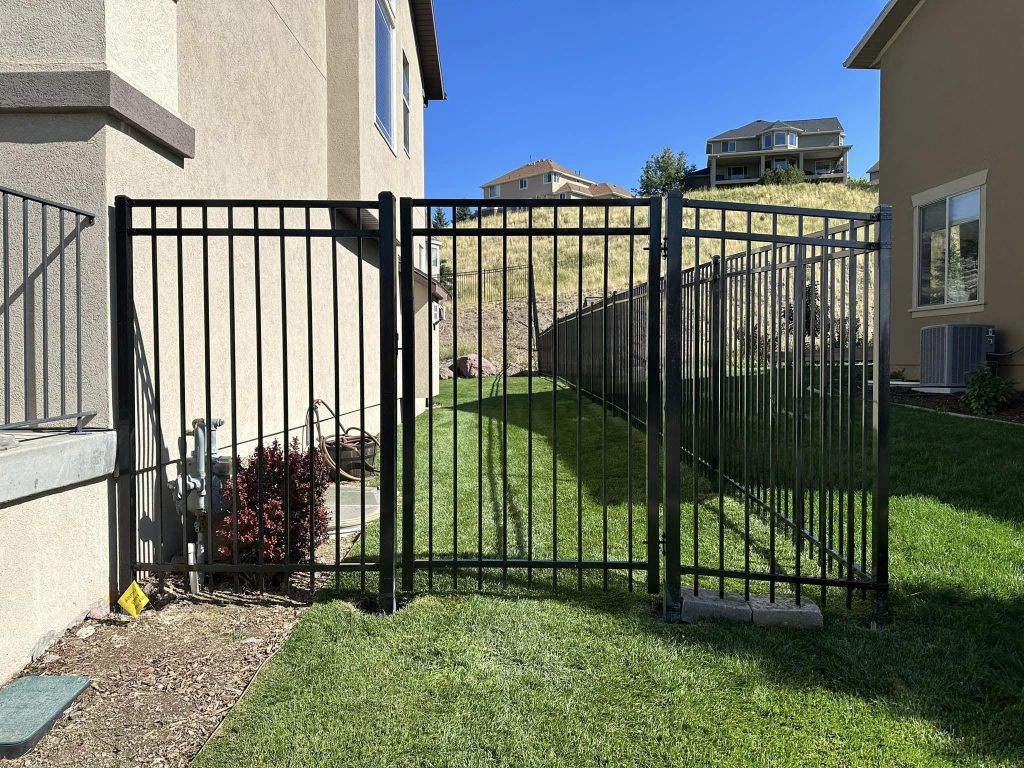
[Image comparing the thickness and welded joints of steel vs. the light-weight screw-together assembly of aluminum]
Performance in the Utah Climate
Utah’s weather provides unique challenges for metal.
- Wind Load: Steel’s rigidity makes it slightly better for extremely high-wind areas, as it won’t “flex” as much as aluminum under pressure.
- Extreme Temperatures: Both metals perform well in our freeze-thaw cycles, but ensure you are using commercial fencing supplier Salt Lake City grade hardware that allows for the thermal expansion and contraction of the metal.
Decision Matrix: Which One Should You Bid?
| Feature | Ornamental Steel | Ornamental Aluminum |
| Primary Use | High-Security / Industrial | Commercial / Multi-Family |
| Strength | Maximum (High Impact) | Moderate (Visual Barrier) |
| Corrosion | Requires Coating Care | Naturally Rust-Proof |
| Weight | Heavy (Requires more labor) | Light (Fast Installation) |
| Price Point | Premium | Economical |
Frequently Asked Questions (FAQ)
Which metal is better for a commercial pool area?
Aluminum is almost always the preferred choice for pools. Constant exposure to splashing water and pool chemicals can accelerate corrosion on steel, whereas aluminum remains unaffected. Check our metal fencing section for pool-code compliant heights.
Can aluminum fences look like steel?
Yes. Modern architectural powder-coating allows aluminum to mimic the matte finish and texture of heavy iron. Most casual observers cannot tell the difference until they touch the material.
Do I need a permit for a 7-foot metal security fence in Salt Lake City?
Yes. In most Utah jurisdictions, any fence over 6 feet requires a building permit. For industrial zones (like M-1 or M-2), you can often go higher, but you will need to provide technical specs, which we provide as part of our B2B fence material distribution.
Are your steel fences welded or assembled with screws?
We primarily stock welded steel panels for maximum security, while our aluminum systems often feature a modular, “hidden-fastener” design for ease of installation.
Where can I find contractor pricing for metal fencing?
We offer exclusive contractor pricing on fence materials for both steel and aluminum. We can provide bulk quotes for large perimeter projects and arrange jobsite delivery in West Jordan and surrounding areas.