

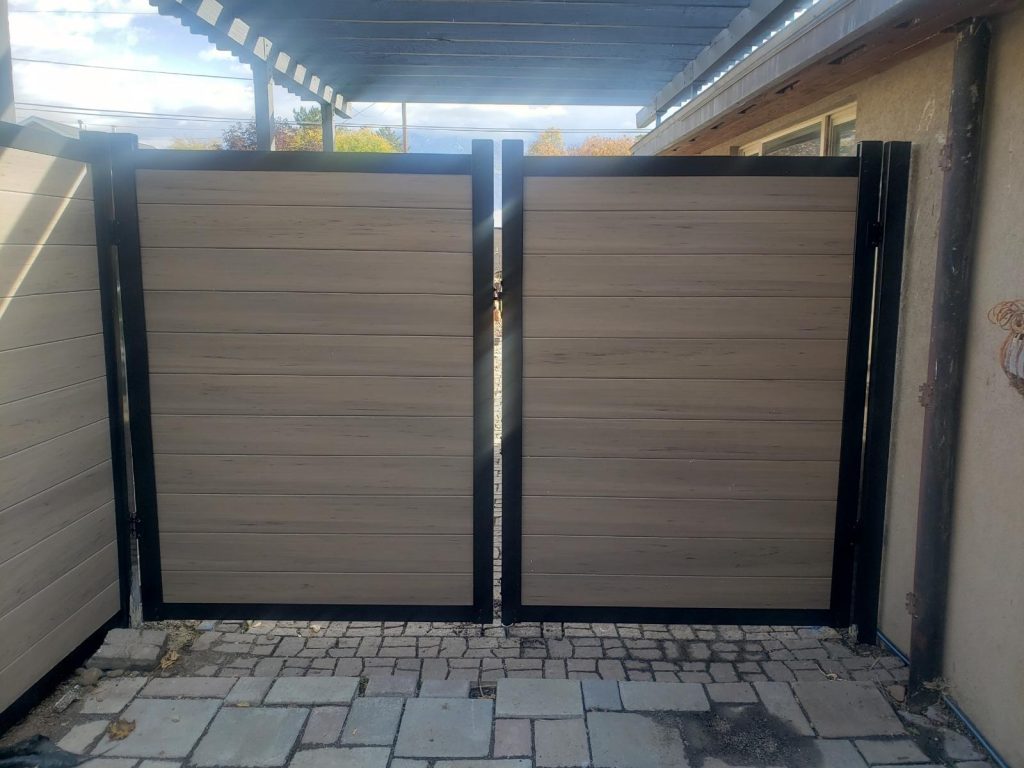
The difference is wall thickness, and it’s the difference between a fence that stands for twenty years and a fence you go back to fix. Residential-grade vinyl is built to a retail price point. Commercial-grade vinyl is built to a load. When a contractor’s name is on the warranty, the thicker profile is the cheaper one.
What does vinyl fence wall thickness actually control?
Vinyl fence performance comes down to how much material is in the post, rail, and picket walls. Thicker walls give you:
- Rail deflection resistance. A thin top rail on an eight-foot section sags in the first hot summer. A thick-walled rail holds line.
- Post rigidity. The post carries the whole system. Thin posts flex at the bracket, which opens routed holes and starts the rattle that becomes a failure.
- Impact tolerance. Lawn equipment, car doors, snow loads, and kids all hit fences. Thin panels crack, thick panels flex.
- UV mass. More material means more titanium dioxide UV inhibitor in the wall, and slower chalking at Utah’s altitude.
Why does thin vinyl fail faster in Utah?
The Wasatch Front stacks three stressors that thin residential profiles were never designed for. UV exposure at elevation is significantly more aggressive than at sea level. The daily summer temperature swing expands and contracts the material constantly. And the wind corridors at the canyon mouths and the Point of the Mountain put sustained lateral load on solid privacy panels.
A privacy fence is a sail. Every square foot of solid panel transfers load into the rail, the post, and the footing. Residential-grade material at standard post spacing does not carry that, which is why the failures cluster in exposed subdivisions and along open frontages.
| Factor | Residential-Grade | Commercial-Grade |
| Wall thickness | Thin | Thick |
| Rail deflection | Sags on long spans | Holds line |
| Impact response | Cracks | Flexes |
| UV inhibitor mass | Lower | Higher |
| Callback risk in wind | High | Low |
How do you tell commercial-grade vinyl from residential-grade?
Ask the supplier for the wall thickness spec, not the marketing grade. Then ask what the recommended post spacing and footing depth is at your fence height and exposure. A supplier who cannot answer both is selling retail material with a commercial label.
For contractors who cannot risk the callback, professional grade fencing inventory means a documented wall spec on every profile, and wholesale vinyl fence panels stocked in the thicknesses that survive Utah exposure.
FAQs
How do I tell commercial-grade vinyl from residential-grade by looking at it?
Pick it up. Weight per section is the fastest field test. Then check the wall at a cut end and look for reinforced rails on longer spans.
Is thicker vinyl always better?
it’s always stronger, and it matters most at height, on solid privacy panels, and in wind exposure. On a low three-rail ranch run, the premium buys less.
Does commercial-grade vinyl cost much more?
Per foot, yes. Per job over five years, it’s usually the lower number once you count callbacks, replacement sections, and warranty labor.
What causes vinyl fence to yellow?
UV degradation in material with insufficient inhibitor content. Thin, low-cost panels chalk and yellow fastest, and Utah’s altitude accelerates it.
Ask for the wall thickness documentation on any profile before you bid. it’s the number that defends your price against a cheaper competitor.
Contact Fence Connection at (801) 566-4266 for wall thickness specs on any profile.